
Key Takeaways
Modern sport event management careers involve creating exciting experiences that fans want to be part of—and talk about long after. Here are key themes to keep in mind:
- Build fan-first moments that scale. The best experiences are shareable, immersive, and easy to participate in, whether you have a ticket or not.
- Treat sponsors as experience partners. Modern activations should feel like part of the event, not an interruption.
- Blend operational excellence with creativity. Great crowd flow, safety, staffing, and timing create the foundation for memorable moments.
- Use technology to personalize engagement. Fans expect relevant content, easy access, and interactive touchpoints across platforms.
- Lead with accessibility and inclusion. Sport event managers should design experiences that allow everyone to participate fully, including fans with disabilities.
Sporting events used to be measured by what happened on the field. Today, the game is only part of the story. Sport fan engagement and experiential event marketing now shape how fans feel about an event—and whether they’ll come back, share it, and bring others with them.
That’s why the upcoming 2026 FIFA World Cup matches in Dallas and the LA 2028 Olympics and Paralympics are such powerful case studies. They show what modern fan engagement activities look like at scale, and how the future of sport event management is evolving beyond logistics into experience design.
In This Blog: |
FIFA: Design Accessible Fan Experiences Beyond the Stadium
This summer, North Texas will be a major hub for global soccer. Dallas Stadium (AT&T Stadium in Arlington) is set to host nine matches for the FIFA World Cup 2026™ across June and July. And for fans who don’t have tickets, there will be plenty of engaging ways for them to partake in the excitement outside of the stadium.
In Dallas, Fair Park will host the FIFA Fan Festival—the central public celebration site. Over 39 event days, the Fan Festival is projected to draw more than 1 million visitors (averaging 35,000+ attendees per day), making it one of the largest free public events in Dallas history. There will be live match broadcasts on giant screens, headline music performances, interactive sponsor activations, youth programming, local and international food and beverage offerings, and cultural showcases that reflect Dallas’ diverse communities.
Through this citywide ecosystem, these FIFA activations and sponsorships are designed to turn fans into storytellers. Think immersive photo moments, interactive digital experiences, and high-energy fan zones built for social sharing. When the experience is strong, fans do the marketing for you—posting, tagging, and amplifying the event far beyond the stadium.
It’s also important to note that, beyond accessible entertainment, managing an event of this scale demands operational excellence. Ensuring smooth crowd flow, safety protocols, and seamless logistics for tens of thousands of daily attendees is foundational to the fan experience.
Furthermore, FIFA’s commitment to "making football truly global" means embedding human rights and accessibility directly into its event management strategy. From anti-discrimination initiatives to comprehensive accessibility standards at both the stadium and the Fan Festival, FIFA demonstrates that inclusion is a top priority for global sport governance.
LA 2028 Olympics & Paralympics: Offer High-Tech and Inclusive Fan Engagement
If FIFA highlights citywide celebration, the Olympics show how a global event builds long-term engagement through a connected fan journey. Planning for LA28 shows how modern corporate sports event management blends technology, storytelling, and personalization to keep Olympic fans engaged before, during, and after the Games.
Recently, Google has announced a partnership with LA28, Team USA, and NBCUniversal to create a more personal and interactive experience for U.S. fans, athletes, and the 70,000 volunteers and members who plan the Games. The partnership highlights tools and platforms for making information and content more accessible, timely, and engaging:
- Google Search and Gemini for answering complex questions and verifying information
- Google Cloud’s AI technology for analyzing workouts for Team USA athletes, getting real-time insights on complex sports data, and more
- YouTube for exclusive short-form content, serving as an extension of NBCUniversal’s coverage
This partnership shows that the fan experience no longer lives in one place. It’s on mobile. It’s in search. It’s in video highlights and athlete stories. It’s in the ease of finding schedules, navigating venues, and staying connected to what you care about most.
And just as important: modern fan engagement means designing experiences for everyone. To make the Games more affordable and inclusive, there will be a random ticket draw with select tickets starting at $28. Furthermore, LA 2028 will also be the first time Los Angeles hosts the Paralympic Games, so Mayor Karen Bass has emphasized a commitment to an accessible and inclusive “Games for All.” Some initiatives included installing Braille translation for the Olympic and Paralympic Flags display at LA City Hall and appointing the city’s first-ever Accessibility Chief within the Office of Major Events.
In short, a core component of modern sport event management strategy is inclusion in all its forms: offering access digitally, globally, socioeconomically, and physically. Integrating these elements is essential for risk mitigation, sponsor alignment, protecting brand reputation, and meeting growing Environmental, Social, and Governance (ESG) expectations.
Accelerate Your Career with an MS in Sport Management
FIFA in Dallas and LA 2028 are real-time examples of how the sport business world is changing. If you’re interested in building a sport event management career, the industry now expects professionals to understand operations, brand partnerships, fan psychology, and experience design.
That’s where the right training can make a difference. SMU’s MS in Sport Management (MSSM) program allows students to develop sport-industry-specific skills, learn essential business skills from faculty at the nationally ranked SMU Cox School of Business, and access experiential learning opportunities with top organizations that can open doors to fan engagement and sport event management careers.
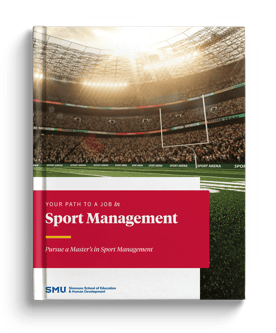
To learn more about turning your passion into a profession in the global sport industry, download our free resource: Your Path to a Job in Sport Management–Pursue a Master’s in Sport Management.